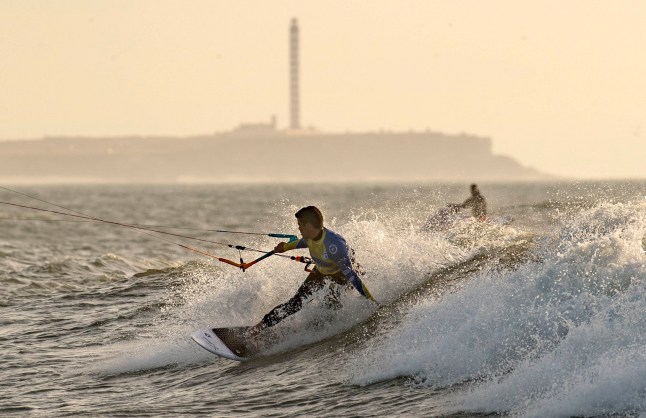
Kitesurfers at Dakhla,in the heart of what international law recognises as the occupied Western Sahara (Picture: Fadel Senna/AFP via Getty Images)
Brahim Chagaf doesn’t know what it’s like to go home.
‘When you’re young,you have this dream of returning,to set up a little business and have a house by the ocean,’ he tells Metro. ‘But after a while,that wears off. You start to lose hope.’
The film director,38,is one of the ‘forgotten people’ of Western Sahara,a tract of desert the size of Britain widely described as Africa’s last colony.
For 50 years,the indigenous Sahrawi people have been forced to live under occupation or go into exile when Morocco invaded and annexed the region after Spain withdrew in 1976.
Today,173,000 Sahrawi refugees live in five camps in the harshest part of the desert,across the border in southwestern Algeria.
This decades-long displacement is one of the world’s most enduring yet overlooked refugee crises.
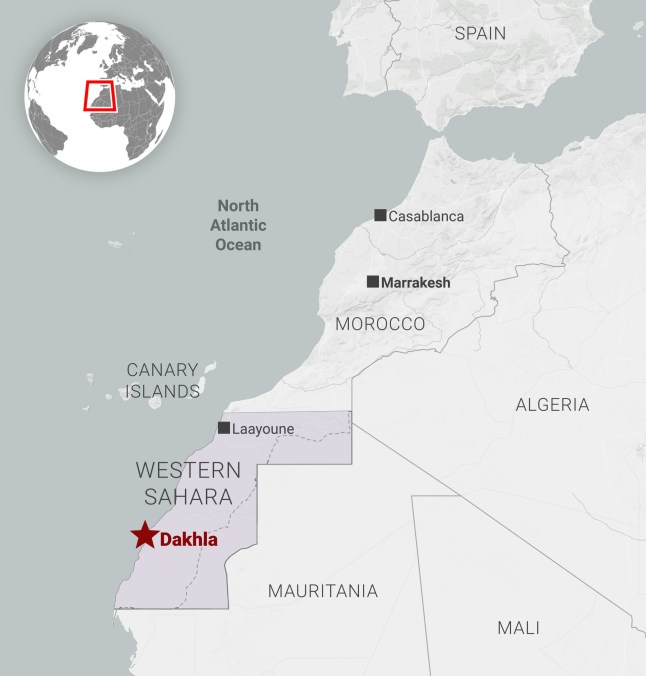 Western Sahara is widely described as Africa’s last colony by the UN and international rights groups (Picture: Metro)The Moroccan Tourist Board describes it as ‘the pearl of southern Morocco…a ‘small part of paradise’.But Dakhla is not part of Morocco under international law,no matter what the government in Rabat claims. To get to Dakhla,British travellers must first make their way to Madrid,but from there,return flights on Ryanair start from just €40 (£35). Transavia France also operates a route from Paris.The Moroccan government has invested heavily in developing tourism in Western Sahara in recent years,and this has attracted the airlines.Flights with Ryanair,Transavia and other travel sites market Dakhla as Morocco,and when you search for a place to stay in Western Sahara on three of the biggest international booking sites,Expedia,Booking.com and Trivago,they do the same.
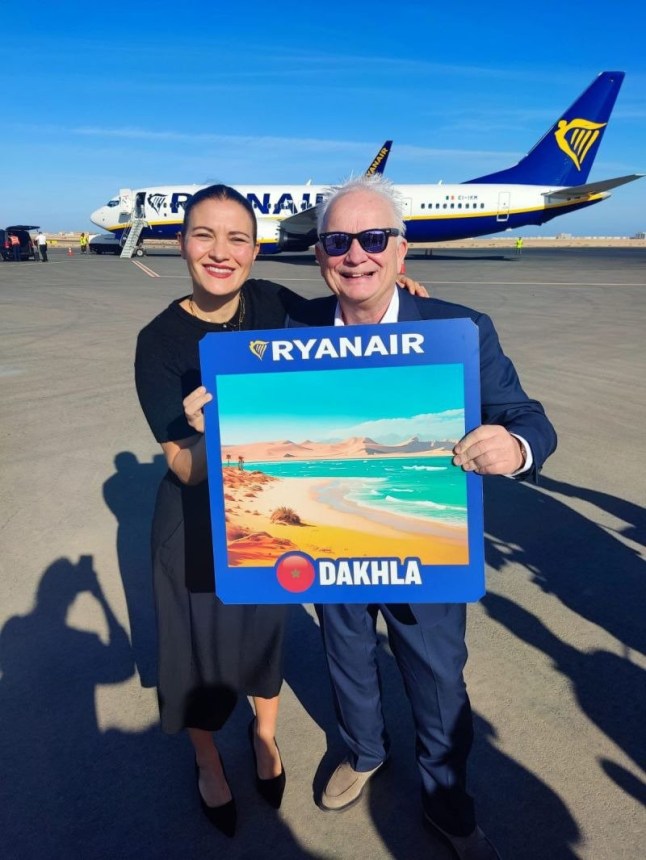 Dakhla is written beside a Moroccan flag on Ryanair campaign material (Picture: Ryanair)Tom Ruck,29,recently flew to Dakhla from Madrid with Ryanair as a ‘cheaper way of getting to Mauritania’ to ride the Iron Ore train.It was ‘pennies’ for the fare,the British content creator tells Metro,and on arrival there ‘wasn’t any inkling that it was Western Sahara’.Tom got a Moroccan stamp in his passport and saw Moroccan flags flying across the city. ‘It was just as though it [Western Sahara] didn’t exist,really,’ he says.Ryanair and Transavia did not respond to requests for comment,nor did Expedia and Trivago.
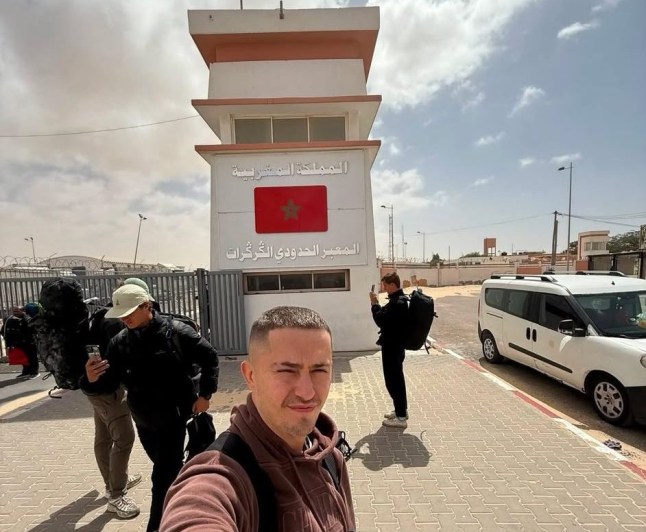 British traveller Tom Ruck with the Moroccan flag hanging in Dakhla (Picture: Tom Ruck)A Booking.com spokesperson said: ‘Our mission is to make it easier for everyone to experience the world and as such we believe it’s up to travellers to choose where they want and need to go. It’s not our place to decide where someone can or cannot travel.’Danielle Smith,director of London-based charity Sandblast,which supports Sahrawi refugees in the UK,says this labelling is both concerning and misleading.‘From our perspective,these companies are complicit in prolonging the suffering of the Sahrawi people by helping entrench the occupation,’ she adds.Sarah Yerkes,senior fellow at the Carnegie Endowment for International Peace and an expert in North Africa,notes that Morocco has been ‘increasingly effective in its efforts to get other countries’ to refer to Western Sahara as Morocco.She says this normalisation lays the groundwork for a formal change in international law.The Moroccan government did not return a request for comment.
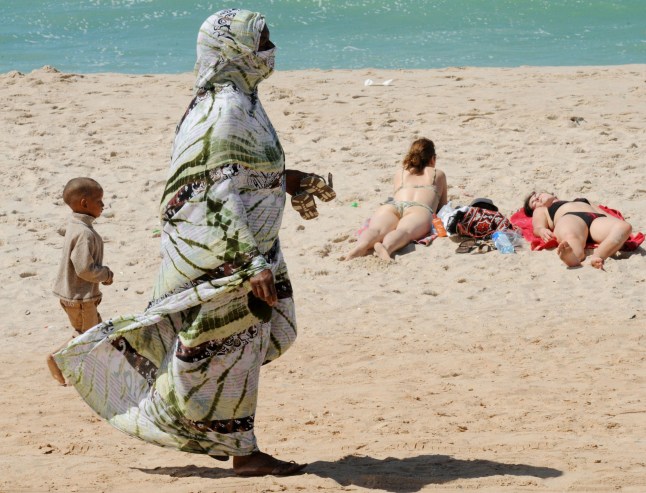 A Sahrawi woman and child pass sunbathers on a beach in Dakhla on 28 February,2010 (Picture: Abdelhak Senna/AFP via Getty Images)The UN has consistently pushed for a solution,including a referendum in which the Sahrawis could choose between independence and integration with Morocco.The Sahrawi right to self-determination is supported by more than 100 UN resolutions,by the opinion of the International Court of Justice,and,to date,by four rulings of the EU Court of Justice.But they have never been able to vote for their own future.Brahim Chagaf feels it firsthand. ‘The hope wears off when you see how the international community is ignoring the laws that they themselves wrote,’ he says.
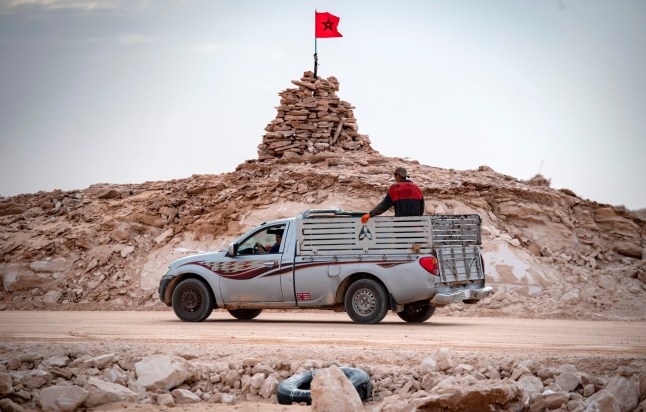 A pickup truck passes by a hilltop manned by Moroccan soldiers on a road between Morocco and Mauritania in Guerguerat in Western Sahara on November 23,2020 (Picture: Fadel SENNA / AFP via Getty Images)In 1975,fleeing war,more than 100,000 indigenous Sahrawis crossed into Algeria.Today,their descendants live in crowded camps in the Tindouf region,administered by the Polisario Front and entirely reliant on humanitarian aid.Residents of the camps face profound challenges,including access to food and water,and an extreme desert climate where summer temperatures can exceed 50°C and winters are desperately cold.All five of the camps are named after cities in the occupied territories (Dakhla,Smara,and the capital,Laayoune),but most of the people who live there have never been to these places. Many have never set foot where their parents or grandparents were born.
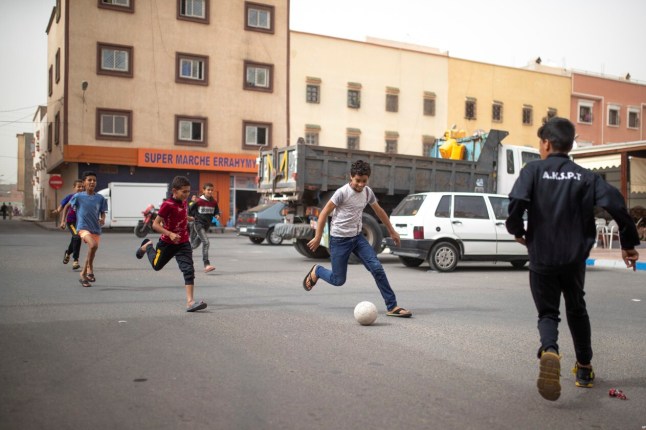 Children play football in downtown Dakhla (Picture: Getty Images)Instead,they have survived for half a century on a food aid programme that was never supposed to last for more than a few years. They choose to live this way because if they settled elsewhere,they would no longer be regarded as refugees. It would mean they have accepted the situation,that they have given up. Mahfud Bechri,member of the working group on Human Rights in Occupied Western Sahara,says that sweeping cuts to international aid made by the Trump administration have caused conditions to worsen.‘We have seen how anaemia and malnutrition have increased,’ he explains. ‘UN agencies and the humanitarian NGOs have issued urgent appeals calling for the need to mobilise resources and to respond to this forgotten and protracted humanitarian crisis. Yet,the response is not coming.’
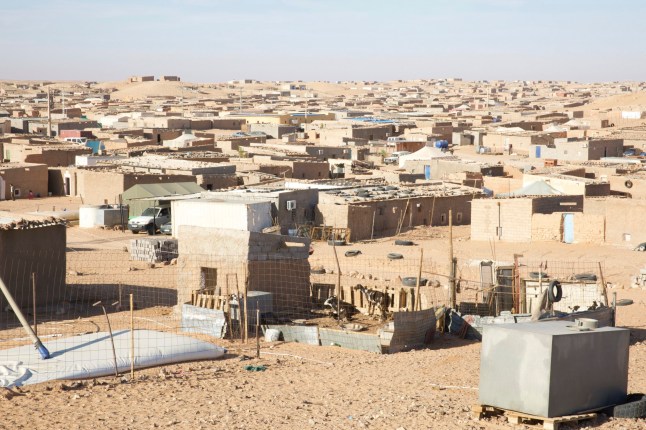 Boujdour Camp,one of five Sahrawi refugee camps near Tindouf,Algeria (Picture: Noe Falk Nielsen/NurPhoto via Getty Images)Abidin Mohamed Hamudi,Sahrawi filmmaker and journalist,remains defiant. ‘Colonialism,occupation,and the oppression of peoples are crimes that have spanned centuries,’ he says.‘Yet if history has taught us anything,it is that the people ultimately triumph,justice prevails,and humanity endures.’
 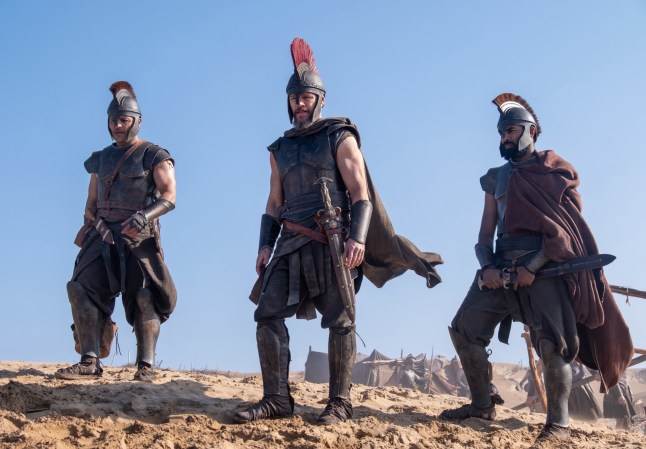 Jimmy Gonzales as Cepheus,Matt Damon as Odysseus and Himesh Patel as Eurylochus in The Odyssey (Picture: Universal Pictures via AP)The shoot in the Dakhla area lasted four days and while it was reportedly completed before FiSahara raised concerns,activists are urging people to stay away from screenings all the same.‘We condemn Nolan for using his privilege to engage in extractive filmmaking in an occupied territory without the consent of its rightful owners,and for helping Morocco to perpetuate its illegal occupation,’ says Maria Carrion,director of the festival.Nolan’s representatives did not return requests for comment.
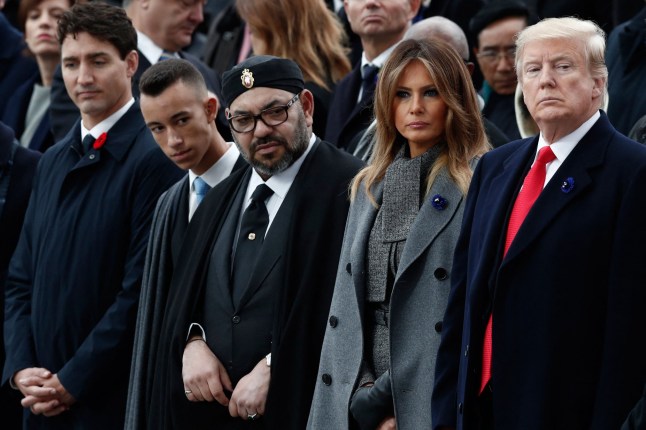 Trump with Moroccan King Mohammed VI (centre),his son Crown Prince Hassan Moulay (2nd left),Melania Trump (2nd right) and then-Canadian Prime Minister Justin Trudeau on 11 November,2018 at the 100th anniversary of Armistice Day (Picture: Benoit Tessier/AFP via Getty Images)The Berm,as it is known,is a giant sand barricade patrolled by more than 100,000 Moroccan soldiers,designed to keep Sahrawis in the eastern part of the desert – and away from the region’s natural resources.Joe Biden’s administration chose not to implement his predecessor’s policy. But the U-turn paved the way for other countries to follow suit,making it more difficult for the Sahrawi Arab Democratic Republic (SADR) to establish an independent state.At one point,as many as 84 countries recognised the SADR administration in the territory of Western Sahara,according to a 2024 report from Migration Policy.But today,dozens,including the UK,have endorsed Morocco’s claim of sovereignty.Now the United Nations appears to want to integrate Western Sahara into Morocco,too.When it last discussed the territory in October 2025,there was no longer any mention of the long-promised referendum. Instead,the presence of the UN peacekeeping mission was extended for another 12 months as part of a motion led by the US.Brahim was ‘extremely anguished’ when he heard the news.
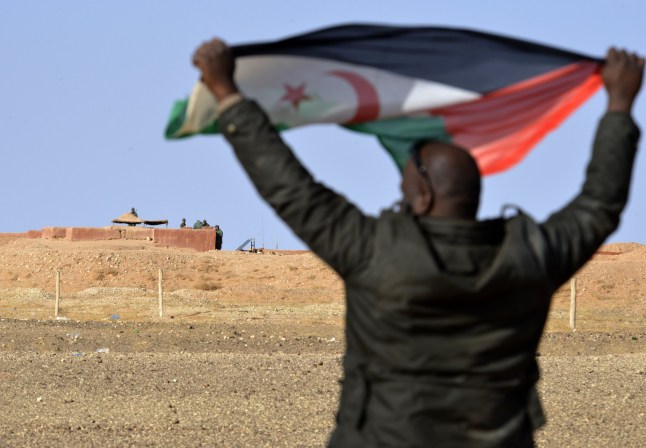 A Saharawi man holds up a Polisario Front flag in the Al-Mahbes area near Moroccan soldiers guarding the Berm on 3 February,2017 (Picture: AFP via Getty Images)‘Sahrawis understand better than anyone what this means,’ he says. ‘The long-term strategy is basically to do away with the referendum that was promised,to create a situation of inevitability and fatigue’ regarding acceptance of the occupation.Morocco claims Western Sahara on the grounds that a few Sahrawi tribes once pledged allegiance to the sultan of Morocco.They say that calls for Western Saharan independence ignore centuries of historic ties between Morocco and the Sahara,and that the territory was illegally detached during the colonial era.To that,Brahim has a question: ‘Let’s suppose there are real,historic ties,and that Sahrawis were Moroccans. Then why is Morocco so afraid of a referendum? What does it have to fear?’He also points to a 1975 advisory opinion from the International Court of Justice which acknowledged certain historical ties,but concluded that these did not amount to sovereignty. Crucially,it affirmed the Sahrawi right to self-determination. Presidents,airlines and movie crews may come and go,but the people of Western Sahara are still waiting to have their say.


Voice Of Zimbabwe: Your Source for Tech, AI, Aerospace, Biotech News
© Voice Of Zimbabwe Privacy Policy Contact us
